

September 2, 2026


If you’ve been exploring a career in medical interpretation, chances are you’ve come across the terms qualified and certified medical interpreter. While they may sound similar, they are not the same thing and understanding the difference is essential for interpreters, employers, healthcare providers, and even patients.
At the Academy of Interpretation (AOI), one of the most common questions we receive is:
“Do I need to be certified to work as a medical interpreter?”
The answer depends on the setting, employer requirements, and your long-term career goals. In this guide, we’ll break down the key differences between qualified and certified medical interpreters, why both matter, and how you can take the next step in your language services career.
What Is a Qualified Medical Interpreter?
A qualified medical interpreter is someone who has completed professional interpreter training and demonstrated the foundational skills necessary to interpret in healthcare settings.
Typically, a qualified medical interpreter has:
Many hospitals, clinics, and language service providers recognize qualified interpreters as professionals who have received formal training and are prepared to work in medical environments.
At AOI, our training programs are designed to help students become qualified medical interpreters by building the real-world skills needed to support communication between patients and healthcare providers.
What Is a Certified Medical Interpreter?

A certified medical interpreter is a qualified interpreter who has gone a step further by passing a nationally recognized certification exam. Certification needs to be renewed every 4 or 5 years, depending on the type.
Certification is typically awarded by organizations such as:
To become certified, interpreters usually must:
Certification exams often assess:
Certification provides an additional level of validation that an interpreter meets nationally recognized standards.
So… Which One Is Better?
The truth is: you often need to become qualified before you can become certified.
Think of it this way:
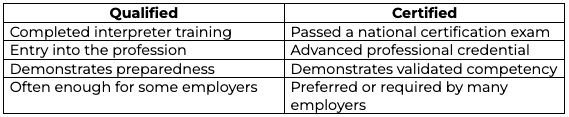
A qualified interpreter has the training.
A certified interpreter has both the training and nationally recognized verification of their skills.
Why Certification Matters in Healthcare
In medical settings, communication errors can have serious consequences. Patients rely on interpreters to accurately communicate symptoms, diagnoses, treatment plans, medications, and consent information.
That’s why healthcare organizations increasingly seek interpreters who are professionally trained and in many cases, certified.
Certification helps:
Many healthcare employers now prioritize interpreters who hold professional credentials because they demonstrate commitment to quality and ethics.
Can You Work Before Becoming Certified?
Yes, many interpreters begin working after completing a qualified medical interpreter training program, especially in entry-level or community-based settings.
However, certification can open doors to:
For many interpreters, becoming qualified is the first milestone, while certification becomes the long-term goal.
How AOI Helps Interpreters Succeed

At the Academy of Interpretation, our mission is to professionalize and maintain quality standards in the language services industry through proper credentialing, education, and experience. Our medical interpreter training programs are designed to:
We believe that strong training creates stronger interpreters and ultimately leads to better outcomes for patients, providers, and communities.
Whether you’re just starting your journey or preparing for certification, understanding the difference between qualified and certified medical interpreters is an important step toward building a successful career.
Both paths play a vital role in improving language access in healthcare. But one thing is certain: professionally trained interpreters are more important now than ever before.
If you’re ready to take the next step toward becoming a qualified, and eventually certified, medical interpreter, AOI is here to help you build the skills, confidence, and credentials needed to succeed.
Interested in medical interpreter training?
Explore AOI’s programs and start your journey toward a rewarding career in language access today.